In 2025, digital marketing is no longer just a growth option for small businesses — it’s a survival strategy. According to Statista, global digital advertising spending is projected to surpass $740 billion by 2025, with small and medium-sized enterprises (SMEs) driving much of this demand as they compete with larger players in online spaces.
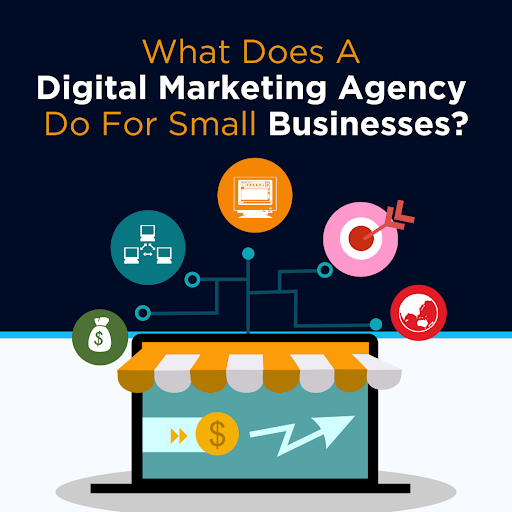
But the critical question remains: what exactly does a digital marketing agency do for small businesses? The answer goes beyond “running ads” or “posting on social media.” A capable agency builds measurable growth systems, grounded in data, technology, and strategy, to transform small enterprises into competitive brands.
The Strategic Role of a Digital Marketing Agency
For small businesses, every dollar counts. Unlike corporates with multimillion-dollar ad budgets, SMEs need campaigns that deliver efficient ROI. A digital marketing agency steps in as both strategist and execution partner — identifying market opportunities, deploying tailored campaigns, and using analytics to ensure every activity drives measurable business impact.
Take, for instance, a small fitness studio in Melbourne that partnered with a digital marketing agency in 2024. Within six months, by combining local SEO, targeted Google Ads, and Instagram reels, the studio reported a 230% increase in membership inquiries. This illustrates the power of precision marketing when executed with expertise.
Core Functions That Drive Small Business Growth
1. Data-Driven SEO for Long-Term Visibility
Research from BrightEdge shows that 68% of online experiences begin with a search engine. For small businesses, ranking on Google is often the difference between being discovered or ignored. Agencies deploy:
-
Local SEO tactics (Google Business Profile optimization, map pack targeting).
-
Content strategies tailored to customer intent, not just keywords.
-
Technical SEO audits to improve website speed, mobile performance, and indexing.
Example: A Rajkot-based dental clinic optimized with localized SEO saw a 40% increase in appointment bookings within three months, highlighting how visibility directly impacts revenue.
2. Paid Advertising with Smart Budgeting
Small businesses often assume PPC advertising is expensive. However, with proper management, it can outperform traditional marketing. Agencies use tools like Google Ads Smart Bidding and Meta Ads Manager to maximize limited budgets.
For example, an e-commerce startup selling handcrafted accessories ran a $500 ad campaign with precise audience targeting. The result? A 6x return on ad spend (ROAS) during a seasonal promotion.
Agencies ensure small businesses avoid wasteful ad spend by continuously testing, refining, and aligning campaigns with buyer intent.
3. Social Media as a Relationship Channel
In 2024, over 5 billion people were active on social media. For small businesses, this isn’t just a brand awareness tool — it’s a direct customer acquisition and loyalty channel.
Agencies help by:
-
Identifying the right platforms (Instagram for fashion, LinkedIn for B2B, TikTok for lifestyle).
-
Creating scroll-stopping content that matches cultural and consumer trends.
-
Using paid ads for retargeting, ensuring interested users convert into customers.
A real-world case: A homegrown bakery in Canada collaborated with a digital marketing agency to launch behind-the-scenes baking reels. Within 90 days, their follower base doubled, and online cake orders grew by 70%.
4. Content Marketing That Builds Authority
Content is no longer about posting weekly blogs; it’s about positioning small businesses as trusted industry voices. Agencies focus on:
-
Developing thought-leadership articles, video explainers, and customer stories.
-
Leveraging AI tools for personalization while ensuring an authentic brand voice.
-
Optimizing for Answer Engine Optimization (AEO), which fuels voice search and featured snippets.
For small businesses, this means customers don’t just see a product — they see expertise, credibility, and solutions.
Beyond Execution: The Advisory Role of Agencies
What truly differentiates a digital marketing agency from freelancers or DIY approaches is strategic advisory. Agencies act as long-term partners, helping small businesses:
-
Understand consumer behavior shifts (e.g., AI-influenced search patterns).
-
Evaluate platforms worth investing in (e.g., Threads vs. X, TikTok vs. Instagram).
-
Adapt campaigns based on performance analytics, not guesswork.
This consultative approach ensures that marketing isn’t a one-time campaign but a sustainable growth engine.
Why Partnering with Vispan Solutions Makes Sense
In today’s crowded market, not all agencies deliver the same value. Vispan Solutions stands out because of its specialized expertise in scaling small businesses. With a presence in India, the USA, Canada, and Australia, Vispan combines global best practices with local insights.
-
Their data-first approach ensures campaigns aren’t based on assumptions but on measurable metrics.
-
Their work with healthcare, real estate, and e-commerce sectors shows a track record of adapting strategies to diverse industries.
-
Their emphasis on Answer Engine Optimization (AEO) ensures small businesses capture voice search and featured snippets — a frontier where many competitors are still lagging.
For small businesses seeking not just visibility but sustainable digital growth, Vispan provides the right mix of creativity, technology, and strategy.
Closing Thoughts
The role of a digital marketing agency in supporting small businesses has never been more critical. From enhancing search visibility and running ROI-focused ads to building meaningful customer relationships, agencies bridge the gap between limited resources and ambitious growth goals.
In an era where every consumer journey starts online, partnering with a forward-thinking agency like Vispan Solutions can be the catalyst that transforms a small business into a scalable, competitive brand.